Foreign portfolio investors pulled ₹44,166 crore out of Indian equities in the first weeks of October 2026 alone1. That took total foreign equity outflows for 2026 to ₹3.04 lakh crore, almost double the ₹1.66 lakh crore pulled out across all of 20251. Facing an estimated $13 billion of outflows in FY27, economists at State Bank of India have proposed an unorthodox response: eliminate the 12.5% long-term capital gains tax entirely for those who hold shares for two to three years2,1. The proposal tests whether tax policy can anchor hot money when global macro currents pull capital in the opposite direction.
Foreign Investors' Retreat from Indian Markets
Between 2021 and September 2026, foreign portfolio investors pulled a cumulative ₹3.51 lakh crore out of Indian equities3. What began as an intermittent trickle has accelerated into a sustained retreat across consecutive calendar years1,3. In 2025, foreign equity selling stood at ₹1.66 lakh crore1. By 2026, the volume of selling surged to ₹3.04 lakh crore, with SBI Research reporting ₹2.61 lakh crore departing in 2026 alongside earlier liquidations1,4.
The velocity in late 2026 shows no signs of fatigue. In October 2026 alone, offshore funds pulled out ₹44,166 crore1. SBI Research characterised this uninterrupted drawdown as a sign of complete detachment from traditional portfolio investment enablers4. Domestic institutional inflows have absorbed much of the paper, but secondary market liquidity has borne the direct brunt of overseas exits1,2.
The macroeconomic buffer remains intact on paper. Foreign exchange reserves continue to look adequate even under severe stress tests3. Yet SBI Research estimates that the balance of payments surplus will shrink to around USD 55–60 billion in FY273. With projected equity outflows of $13 billion in FY27, the central bank's external cushions face narrower room for error2,3.
Global Forces and the AI Shift
Foreign capital did not leave simply because domestic earnings faltered. SBI Research identified three immediate global triggers: elevated crude oil prices, a stronger US dollar, and rising US bond yields1. When US Treasury paper yields attractive nominal returns in a firm dollar environment, the hurdle rate for holding emerging market equity rises automatically1. Risk premiums that looked acceptable when global rates sat near zero no longer justify currency risk.
At the same time, global equity allocations experienced a sector shift toward artificial intelligence1. Institutional money managers rotated capital out of broad consumer and financial franchises into hardware and semiconductor supply chains1. SBI Research highlighted that the lack of Indian stocks linked directly to the artificial intelligence theme caused offshore funds to reallocate capital into North Asian markets1.
Taiwanese and South Korean bourses offered immediate exposure to graphics processing units, memory chips, and server assembly1. India's equity indices, dominated by private banks, consumer goods, and IT services, offered no direct proxy for that capital expenditure cycle1. Foreign allocators treated Indian holdings as a liquid source of cash to fund positions elsewhere1.
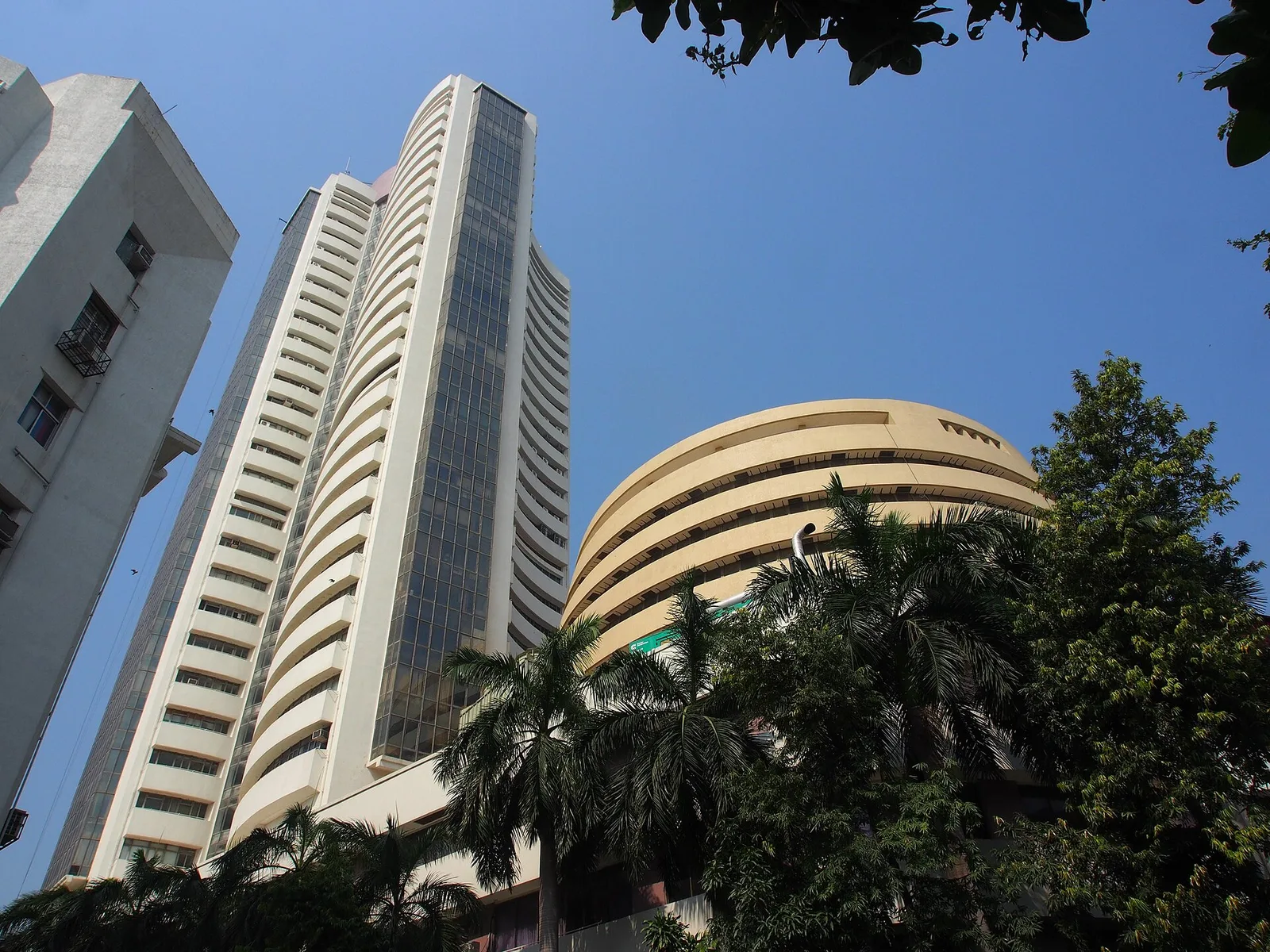
Rethinking the Capital Gains Tax
The tax code currently imposes a 12.5% long-term capital gains tax on equity profits exceeding ₹1.25 lakh, a rate retained in the Union Budget 20261. Before 2018, long-term equity gains enjoyed complete exemption from capital gains tax, subject to the payment of the securities transaction tax. The current framework taxes short-term gains at 20% and long-term gains at 12.5% for shares held beyond 12 months1.
SBI Research argued in its Ecowrap report on October 12, 2026, that the current structure fails to differentiate between speculative trading and patient capital2. The bank's research desk recommended abolishing the LTCG tax on equities entirely, provided the investor commits to a longer holding window of two to three years2. The economic intent is to replace the 12-month boundary with a multi-year commitment, creating what the economists termed low taxation moats2,3.
By building tax incentives around holding horizons of approximately three years, the state could give global asset managers a financial reason to sit out cyclical volatility2,3. SBI Research argued that the underlying India play remains structurally attractive, especially within blue-chip corporations3. A tax-free exit at year three would offset the currency depreciation risk that global funds face when committing balance sheet capital1,3.
SBI Research characterised this uninterrupted drawdown as a sign of complete detachment from traditional portfolio investment enablers.
Primary Markets vs. Secondary Sales
An unusual divergence has emerged within foreign flows. Even as foreign portfolio investors dumped shares in the secondary market, a significant share of foreign equity flows moved into primary market offerings2. Initial public offerings and qualified institutional placements continued to absorb offshore capital, even as listed secondary counters faced daily net foreign sales1,2.
This divergence indicates that overseas allocators do not object to Indian corporate balance sheets. Instead, they reject secondary market valuations relative to alternative dollar assets1,2. Primary offerings routinely price at discounts to prevailing sector multiples, offering an immediate safety buffer that daily market transactions do not provide2.
The current 12-month capital gains rule treats a pre-IPO allocation and an open-market trade identically once the minimum duration passes1. If secondary market holdings carried an exemption after three years, institutional investors would have an incentive to accumulate existing blue chips during cyclical sell-offs rather than confining their foreign direct participation to fresh paper issuances2,3.
Addressing Debt and Export Challenges
The Ecowrap recommendations extend beyond equity market indices. SBI Research noted that the Reserve Bank of India had already deployed strong policy measures, describing the central bank as firing a bazooka of measures to stabilise systemic liquidity1. However, monetary interventions cannot solve structural frictions in corporate financing without fiscal intervention1.
One critical friction sits in external commercial borrowings, where withholding tax rates range between 5% and 20%1. Indian corporations rely on overseas debt to fund capital expenditure, but uncertainty over how cross-border tax treaties apply has raised borrowing costs1. SBI Research called for unambiguous withholding tax guidelines to ensure corporate borrowers can reliably claim benefits under Double Taxation Avoidance Agreements1.
A parallel recommendation targets the real economy of trade. SBI Research urged the government to simplify repatriation procedures for export earnings, establishing a predictable timeframe of around six months while granting extensions only on an exception basis1. Tightening export receipts while rationalising foreign debt tax structures would strengthen dollar liquidity through standard business channels, reducing the macro dependence on portfolio equity flows1,3.
Balancing Fiscal Sacrifice and Stability
Abolishing capital gains tax involves a direct revenue sacrifice. When the exchequer retained the 12.5% rate in the Union Budget 2026, it counted on equity profits to support fiscal consolidation1. Surrendering capital gains collections on equities held beyond two or three years would leave a hole in direct tax receipts, which must then be funded through other revenue streams2,1.
The counterargument from SBI Research is that the fiscal cost of lost capital gains collections is smaller than the macroeconomic cost of financing an external deficit2,3. With projected balance of payments surpluses moderating toward USD 55–60 billion and $13 billion leaving via equity redemptions, currency intervention consumes sovereign energy2,3. Inflows that stay locked for three years reduce currency volatility and lower risk premiums across corporate debt and equity3.
The decision hinges on whether foreign funds respond primarily to domestic tax incentives or to international rates2,1. If US bond yields remain high and the dollar stays strong, eliminating a 12.5% domestic tax may not be enough to turn the tide1. Yet if global allocators are merely hesitating over net dollar returns, offering a clear three-year zero-tax window could establish the anchor Indian equities have lacked since 20213,2.
By the numbers
- ₹44,166 crore1
- Equities sold by foreign portfolio investors in October 2026 till date
- ₹3.04 lakh crore1
- Total foreign equity outflows from India in 2026
- ₹1.66 lakh crore1
- Foreign equity outflows from India in 2025
- ₹3.51 lakh crore3
- Cumulative foreign equity withdrawals between 2021 and September 2026
- 12.5%1
- Current LTCG tax rate on equity gains above ₹1.25 lakh
- $13 billion2
- Estimated equity outflows projected by SBI Research in FY27
- 5% to 20%1
- Current range of withholding tax on external commercial borrowings
- USD 55–60 billion3
- Projected balance of payments surplus for India in FY27
The lens: Porter's Diamond / Capital Cost Competitiveness Lens
How to evaluate the equity tax exemption
- 1Factor Conditions: Measure how a 12.5% levy on capital gains impacts net dollar returns for foreign institutions compared to zero-capital-gains regimes in competing regional markets1.
- 2Firm Strategy and Structure: Assess whether corporate equity capital is raising funds via primary issues or secondary trades, noting foreign concentration in primary paper2.
- 3Related and Supporting Conditions: Examine debt financing and export repatriation pipelines, identifying where withholding taxes between 5% and 20% create friction1.
- 4External Demand and Macro Shocks: Model the relative pull of US bond yields, oil prices, and dollar strength against domestic equity valuations1,3.
What to watch
- The Union Budget response to SBI Research's proposal to extend the LTCG holding period to two or three years2.
- Monthly foreign portfolio flow trajectory against the FY27 outflow projection of $13 billion2.
- Ministry of Finance revisions to external commercial borrowing withholding tax rates under DTAA guidelines1.
For MBA aspirants
GD, PI and WAT
GD topic
Should India abolish long term capital gains tax on equity to halt foreign investor outflows
For
- Cumulative foreign equity outflows of ₹3.51 lakh crore since 2021 demonstrate that the current 12.5% tax regime fails to anchor foreign capital during global tightening cycles3,1.
- Extending the holding period to two or three years in exchange for zero tax creates a structural incentive for long-term patient capital rather than speculative hot money2,3.
- With balance of payments surpluses projected to shrink to USD 55–60 billion in FY27, India requires fiscal measures to protect external stability alongside central bank liquidity interventions1,3.
Against
- Foreign selling is primarily driven by external macroeconomic factors like US interest rates, elevated oil, and the AI boom in North Asia, which domestic tax changes cannot alter1.
- Scrapping the 12.5% LTCG tax compromises direct tax collections and creates vertical inequity by favoring equity investors over salaried taxpayers1.
- Foreign capital is already participating heavily in primary market offerings, showing that quality Indian assets attract investment without requiring tax breaks2.
Questions an interviewer could ask
- 1.Why does SBI Research argue that extending the equity holding period to three years will anchor foreign portfolio money [2,3]?
- 2.How do rising US bond yields and high crude oil prices reduce the attractiveness of Indian equities for foreign allocators [1]?
- 3.Why have foreign investors continued subscribing to Indian primary issues while selling off secondary market holdings [2]?
- WAT prompt
- Evaluate whether structural tax exemptions on long-term equity can effectively counter global capital flight driven by interest rate differentials and thematic sector shifts.
- As a case
- A global fund manager is allocating $500 million across emerging Asian markets in FY27 while weighing India's 12.5% capital gains tax against alternative technology plays in North Asia. How should the fund structure its investment horizon between primary and secondary assets to optimise post-tax risk-adjusted returns [1,2]?
Read it, then practise it
Could you crack this in an interview?
Reading builds the context; a timed attempt with a live AI interviewer builds the skill. MECE scores your structure, maths and synthesis and shows exactly where you lost marks.
Questions people ask
- What did SBI Research propose regarding long term capital gains tax on shares?
- SBI Research recommended in its Ecowrap report on October 12, 2026, that the government abolish the 12.5% LTCG tax on equities for investors who hold shares for two to three years2,1. The goal is to build low taxation moats that anchor patient foreign capital2,3.
- How much money have foreign portfolio investors pulled from Indian equities in 2026?
- Foreign portfolio investors sold ₹3.04 lakh crore worth of Indian equities in 2026, which included ₹44,166 crore withdrawn in October 2026 alone1. Cumulative withdrawals between 2021 and September 2026 reached ₹3.51 lakh crore3.
- Why are foreign investors redirecting money away from India to other Asian markets?
- Foreign allocators have been drawn to North Asian markets due to their heavy concentration of stocks tied to the artificial intelligence boom, an area where Indian equity indices have limited direct exposure1. Rising US bond yields, a stronger dollar, and elevated crude oil prices also weakened risk appetite for Indian shares1.
- What changes did SBI Research recommend for foreign debt and export earnings?
- SBI Research recommended clarifying withholding tax rates on external commercial borrowings, which currently sit between 5% and 20%, to ensure consistent application of double tax treaty benefits1. It also advised capping export repatriation timeframes at around six months to accelerate domestic foreign exchange receipts1.
Notes and sources
- 1Abolish long-term capital gains tax for equity: SBI Research recommends, says ‘government must anchor hot money flows’ - The Times of India · timesofindia.indiatimes.com
- 2Abolish LTCG tax on equities, extend holding period to 2 3 years: SBI Research - BusinessToday · businesstoday.in
- 3SBI Research calls for abolition of LTCG tax on equities to boost foreign capital inflows - The Tribune · tribuneindia.com
- 4FPIs pull out ₹3.51 lakh crore since 2021; SBI Research seeks LTCG tax relief to attract flows · upstox.com
Figures are as published by these sources on or before 13 October 2026. Researched and drafted with AI, checked against the sources above and reviewed by the MECE team before publishing. Photographs are used under their open licences; the photographer and licence are credited under each one.
MECE Editorial
MECE Insights explains one business story a day for MBA students and aspirants: the facts with their sources, the strategy underneath, and how it can come up in a GD, a WAT or an interview.
Filed underFinancelong term capital gains taxSBI Research EcowrapFPI outflows Indian equities