In Q2 2026, SpaceX spent USD 15.83 billion on artificial intelligence hardware while generating USD 7.81 billion in total quarterly revenue3. That spending imbalance generated a net quarterly loss of USD 541 million3. To keep expanding its computing power, the enterprise is now negotiating a USD 40 billion debt package composed of investment-grade bonds and bank loans1. Elon Musk is turning corporate credit markets into a primary funding source for processing hardware, betting that secured access to chips will outweigh heavy debt maintenance costs.
SpaceX's Massive Silicon Investment
In Q2 2026, SpaceX generated USD 7.81 billion in total revenue3. During those same three months, the business spent USD 18.37 billion on capital projects, with USD 15.83 billion directed straight into artificial intelligence hardware3. Spending double your quarterly revenue on processors creates an immediate cash deficit, resulting in a net loss of USD 541 million for the quarter3. To keep buying hardware at this pace, the enterprise must borrow on an unprecedented scale.
SpaceX is now in talks with banks and private institutions to secure USD 40 billion in debt financing specifically to purchase processing chips from Nvidia1. The proposed transaction includes USD 30 billion in investment-grade bonds alongside USD 10 billion in direct credit from financial institutions1. Apollo Global Management is leading the arrangement, while Pacific Investment Management Co. is evaluating participation1. The financial package is structured to close in 20271.
This borrowing follows a massive balance sheet expansion earlier in the year. In June 2026, SpaceX completed an initial public offering that collected USD 86 billion5,6. Shortly after that public debut, the company sold USD 25 billion in high-grade bonds5. Borrowing another USD 40 billion moves the business into financial territory usually reserved for global industrial conglomerates or national telecommunication networks.
Because SpaceX bonds carry a BBB rating, the debt sits at the second-lowest rung of investment-grade credit5. That specific rating allows regulated institutional investors like pension funds and insurance managers to buy the debt5. Without investment-grade standing, gathering USD 30 billion from bond markets would require paying steep junk-bond yields.
AI Revenue Growth vs. Capital Expenditure
While capital requirements are massive, the revenue generated from selling computing power is expanding rapidly. In the second quarter of 2026, SpaceX recorded USD 2.6 billion from its artificial intelligence division2. That figure represents a 247% gain compared to the same period in 2025 and a 213% increase over the previous quarter2.
Clients are committing capital long before processors arrive in server racks. SpaceX has secured agreements worth more than USD 14 billion for future compute capacity sales2. Buyers are reserving cluster access months ahead to guarantee processing availability. Commercial demand of this scale helps justify heavy debt loads, as long-term contracts provide structured cash flows to cover interest payments.
The debt mechanics build on asset-backed models developed in recent commercial transactions. Financial managers previously executed chip-leasing deals with Apollo for xAI, providing USD 3.5 billion in late 2025 and USD 3.4 billion in early 20267. Rather than funding pure software research, these facilities are secured against tangible hardware assets that retain commercial value in secondary markets.
Stock markets reacted with quiet caution to news of the borrowing package. SpaceX shares slipped between 1% and 1.9% following reports of the debt package, while Nvidia stock rose roughly 0.5%8. Equity investors worry about long-term interest burdens, while chip makers gain guaranteed hardware orders regardless of downstream software yields.
Nvidia: The Chosen Architecture
Building raw computing clusters requires choosing a single technical standard. During an earnings call in August 2026, Elon Musk stated that SpaceX will build exclusively on Nvidia technology2. Musk pointed to Nvidia's Vera Rubin architecture, describing it as the best AI computer currently available2.
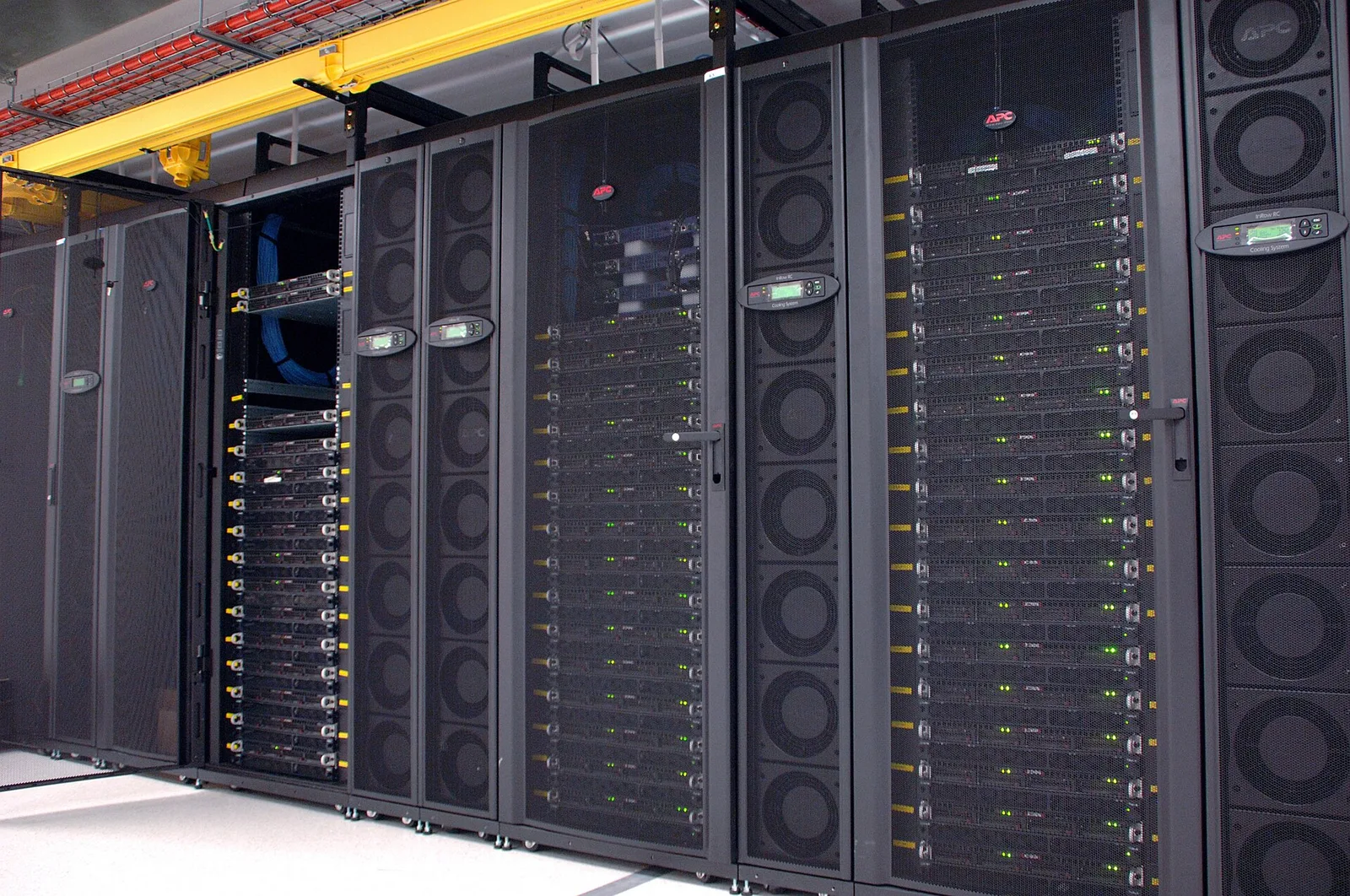
The physical scale of these installations requires uniform components. By August 2026, SpaceX had installed 110,000 Nvidia GB200 chips and 440,000 GB300 units in its primary Colossus 2 facility1. The deployment plan called for an additional 220,000 GB300 chips within days of that earnings call, followed by another 220,000 in November and a final batch of 220,000 by late December subject to factory capacity1.
Beyond that initial setup, SpaceX plans to acquire another 660,000 chips to expand cluster size1. Standardising on one architecture reduces engineering friction across thousands of interconnected server racks. Running a single software environment across hundreds of thousands of processors eliminates the translation layers needed when mixing components from different manufacturers.
Selecting one vendor provides immense bargaining weight with suppliers, though it binds corporate timelines directly to Nvidia's production schedules. If high-end semiconductor assembly falls behind schedule, SpaceX cannot easily redirect capital to alternative chips without rebuilding its underlying software layer.
Instead of relying on venture equity to absorb losses, computing builders are turning into heavily leveraged infrastructure operators.
Navigating Supply Chain Risks
Relying entirely on one chip supplier creates physical vulnerabilities. In its initial public offering filings, SpaceX explicitly warned investors that hardware supplier constraints pose a direct risk to its artificial intelligence goals9. Manufacturing shortages at semiconductor foundries and broader supply network bottlenecks can delay expansion plans regardless of how much capital SpaceX raises9.
To insulate itself against long-term supply chain shocks, SpaceX launched the Terafab initiative on March 21, 202610. The project aims to construct a fully integrated silicon fabrication plant capable of producing over one terawatt of artificial intelligence computing capacity every year10. Internalising manufacturing is a classical industrial strategy to escape external supplier margins and allocation limits.
Building a semiconductor fabrication plant requires years of cleanroom construction, optical equipment procurement, and process testing. Until Terafab becomes operational, SpaceX remains dependent on external manufacturing pipelines. Borrowing USD 40 billion to acquire Nvidia chips acts as a bridge strategy, ensuring access to physical hardware while self-funded factory capacity is designed and constructed.
The scale of this bridge strategy demonstrates why chip access has become a balance sheet game. Companies that cannot raise tens of billions in credit markets risk being locked out of top-tier hardware allocations, irrespective of their algorithmic progress.
The AI Debt Wave
The USD 40 billion package sought by SpaceX is part of a structural shift in how tech hardware is financed. Morgan Stanley estimates that artificial intelligence infrastructure will require USD 1.5 trillion in external funding by 20284. Cash flows from software subscriptions alone are insufficient to build physical data centres, buy processors, and secure power connections at this speed11.
Private equity groups and institutional fund managers are stepping in to fill the liquidity gap. Apollo Global Management and PIMCO participated in platform structures organised by Nvidia and financial partners in August 2026 that aimed to mobilize over USD 500 billion for computing infrastructure8. These debt platforms treat hardware clusters like toll roads or energy pipelines, offering predictable fixed-income returns to institutional lenders.
This financial structure changes the risk profile of technology companies. Instead of relying on venture equity to absorb losses, computing builders are turning into heavily leveraged infrastructure operators. Interest payments must be satisfied in cash regardless of whether software demand remains high or experiences temporary lulls.
For SpaceX, borrowing heavily allows rapid hardware accumulation at a time when raw compute capacity dictates competitive positioning. As long as compute agreements continue generating billions in forward sales, credit markets will keep supplying cash. If customer demand weakens, managing debt service across tens of billions in bonds will become the primary corporate test.
By the numbers
- USD 40 billion1
- debt financing sought by SpaceX for Nvidia chips
- USD 30 billion1
- investment-grade debt portion of the financing package
- USD 10 billion1
- bank loans portion of the financing package
- 247%2
- year-on-year growth of SpaceX's AI segment revenue in Q2 2026
- USD 2.6 billion2
- SpaceX's AI segment revenue in Q2 2026
- USD 18.37 billion3
- SpaceX's capital expenditures in Q2 2026
- USD 15.83 billion3
- capital expenditures directed specifically to AI in Q2 2026
- USD 541 million3
- SpaceX's net loss in Q2 2026
The lens: Capital Structure and DuPont Analysis
How to break it down
- 1Return on Equity Decomposition: Evaluate how asset turnover from compute sales balances high financial leverage from USD 40 billion in debt.
- 2Cost of Capital Assessment: Measure the cost of BBB investment-grade debt versus equity dilution following the USD 86 billion IPO.
- 3Asset Quality Analysis: Assess the depreciation schedule and collateral value of Nvidia GPU clusters backing private loan facilities.
- 4Liquidity Risk Profiling: Model debt service coverage ratios against USD 14 billion in contractually committed compute sales.
What to watch
- Final closing terms of the USD 40 billion debt package planned for 2027.
- Delivery cadence of the planned 660,000 additional Nvidia chips for Colossus 2.
- Construction milestones and equipment procurement status for the Terafab facility.
For MBA aspirants
GD, PI and WAT
GD topic
Is heavy debt financing appropriate for high-depreciation AI hardware investments?
For
- AI compute generates predictable, high-margin subscription cash flows through long-term agreements like SpaceX's USD 14 billion sales pipeline.
- Debt financing prevents equity dilution for existing shareholders after raising USD 86 billion in a public offering.
- BBB credit ratings enable pension and insurance funds to participate, lowering the weighted average cost of capital.
Against
- Rapid GPU obsolescence risks leaving companies with debt service on obsolete hardware assets.
- A quarterly net loss of USD 541 million highlights the vulnerability of debt coverage if revenue growth slows.
- Single-vendor dependency on Nvidia leaves debt-funded capital expenditures vulnerable to foundry bottlenecks.
Questions an interviewer could ask
- 1.Why would SpaceX choose investment-grade debt over equity to fund silicon purchases after an USD 86 billion IPO?
- 2.How does a BBB credit rating impact SpaceX's ability to raise tens of billions in corporate debt?
- 3.What are the operational risks of relying on a single chip supplier while constructing a self-owned factory like Terafab?
- WAT prompt
- Evaluate the financial risks and strategic rewards of using corporate debt markets to build large-scale artificial intelligence hardware clusters.
- As a case
- SpaceX is spending USD 15.83 billion quarterly on AI capital expenditures while earning USD 2.6 billion in AI revenue. How would you structure a debt model to ensure solvency while scaling processor capacity?
Read it, then practise it
Could you crack this in an interview?
Reading builds the context; a timed attempt with a live AI interviewer builds the skill. MECE scores your structure, maths and synthesis and shows exactly where you lost marks.
Questions people ask
- Why is SpaceX borrowing $40 billion for Nvidia chips?
- SpaceX needs substantial processing power for its Colossus 2 computing cluster and seeks $40 billion in debt to acquire 110,000 GB200 and over 440,000 GB300 Nvidia chips without diluting corporate equity1.
- How is the $40 billion SpaceX financing structured?
- The debt package consists of approximately $30 billion in investment-grade corporate bonds and $10 billion in direct bank loans, with Apollo Global Management leading the deal1.
- What is the Terafab project mentioned by SpaceX?
- Announced in March 2026, Terafab is SpaceX's planned mega-chip fabrication facility designed to produce over one terawatt of AI computing capacity per year to reduce reliance on external chip suppliers10.
Notes and sources
- 1SpaceX’s $40 billion AI bet: Elon Musk turns to banks and investors for Nvidia chips | Company Business News · livemint.com
- 2Is SpaceX About to Hand Nvidia a $40 Billion Payday? Here's What it Could Mean for Investors. | The Motley Fool · fool.com
- 3SpaceX Wants to Borrow $40 Billion to Buy Nvidia Chips - 24/7 Wall St. · 247wallst.com
- 4SpaceX seeks $40 billion financing to buy Nvidia chips, sources say - CNA · channelnewsasia.com
- 5SpaceX looks to raise $40bn to buy Nvidia chips in financing led by Apollo · finance.yahoo.com
- 6Wall Street banks see AI ’super cycle’ set to boost deals, financing By Reuters · investing.com
- 7$SPCX reportedly seeking $40 billion to buy Nvidia chips · reddit.com
- 8SpaceX Seeks $40 Billion Financing for Nvidia Chips, FT Reports · finance.yahoo.com
- 9SpaceX admits it can't find enough chips for orbital AI yet, requires 'significantly more than are currently available to us' - firm's risk factors in IPO paperwork also says ambitious TeraFab project may not be successful · tomshardware.com
- 10SpaceX · en.wikipedia.org
- 11SpaceX seeks to raise $40 bln to buy Nvidia chips- FT By Investing.com · investing.com
Figures are as published by these sources on or before 8 October 2026. Researched and drafted with AI, checked against the sources above and reviewed by the MECE team before publishing. Photographs are used under their open licences; the photographer and licence are credited under each one.
MECE Editorial
MECE Insights explains one business story a day for MBA students and aspirants: the facts with their sources, the strategy underneath, and how it can come up in a GD, a WAT or an interview.
Filed underStrategySpaceX AI debt financingElon Musk Nvidia chipsColossus 2 AI cluster