Air India's CEO, Tewolde Gebremariam, is steering the airline through turbulent skies with a strategic focus on expanding its widebody fleet, cutting costs, and regaining market share. Despite recording losses exceeding ₹220 billion in fiscal 2026, more than double the previous year's, the airline is committed to a turnaround plan that includes ordering 600 aircraft, 80 of which are widebody jets5,2,4. The airline's domestic market share has risen to 26.8% as of September 2026, reflecting a concerted effort to reclaim its position in the aviation market3.
The Strategic Push for Widebody Aircraft
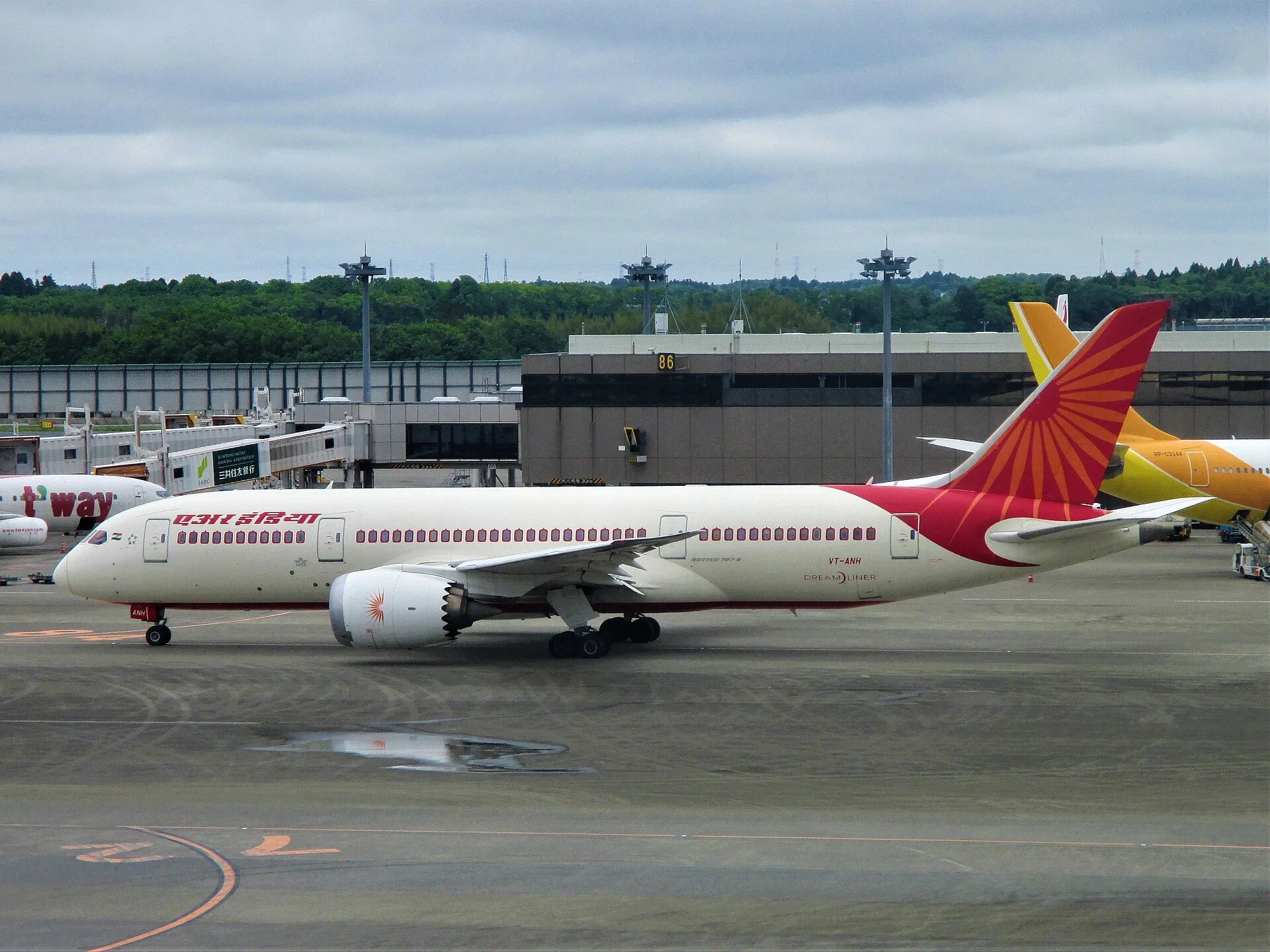
Air India's strategic pivot towards widebody aircraft is central to its turnaround plan. With 80 widebody jets on order, the airline aims to enhance its international and long-haul capabilities4. This move follows a significant investment of USD 400 million in 2022 to refurbish its existing fleet of Boeing 787 and 777 aircraft1.
The decision to expand the widebody fleet aligns with Air India's ambition to increase its market share in international travel. The airline has already seen its long-haul market share grow from 16% to 22% post-privatisation, indicating potential for further gains6.
Supply chain bottlenecks have delayed the retrofitting process, impacting the rollout of upgraded cabins and possibly affecting service quality7. Despite these challenges, the widebody expansion is a calculated move to boost Air India's competitiveness on global routes.
Cost-Cutting: A Necessary Strategy
With mounting losses, cost-cutting is a critical focus for Air India. The airline has established a multidisciplinary team to identify savings opportunities and enforce stricter spending controls8. This is part of a broader strategy to streamline operations and improve financial performance.
In fiscal 2026, Air India reported consolidated losses exceeding ₹220 billion, highlighting the urgency of cost management2. The airline's financial struggles are compounded by airspace restrictions and legacy issues from its pre-privatisation era5.
Effective cost-cutting measures could provide necessary relief to Air India's bottom line, allowing reinvestment in growth areas and improving its competitive position.
Air India's CEO bets on widebody aircraft and cost-cutting to reclaim market share amid mounting losses.
Market Share Ambitions and Growth
Air India's market share has been on an upward trajectory, rising to 26.8% in September 2026 from 23.9% in June 20263. This growth is partly due to the successful integration of Vistara, which expanded Air India's fleet and network1.
The airline's domestic market share increase from 9.7% in FY 2021-22 to 14.4% in September 2026 reflects a strategic focus on capturing a larger share of the rapidly growing Indian aviation market9.
Despite these gains, Air India faces stiff competition from IndiGo, which holds a dominant 63.6% market share10. To further consolidate its position, Air India must utilize its expanded fleet and enhanced service offerings.
Challenges in Transformation
Air India's transformation journey is fraught with challenges, from supply chain issues to financial losses. The USD 400 million fleet modernization programme is running up to two years behind schedule, complicating efforts to upgrade the airline's service offerings7.
The airline's financial woes are exacerbated by legacy issues, including an ageing fleet and operational inefficiencies inherited from its pre-privatisation era6. Addressing these challenges requires an approach that balances immediate cost-cutting with long-term strategic investments.
Despite these hurdles, Air India's leadership remains committed to executing its five-year transformation plan, with a focus on expanding its fleet and improving operational efficiency1.
Future Prospects and Challenges
To achieve a sustainable turnaround, Air India must successfully execute its fleet expansion and cost-cutting strategies. The airline's ongoing negotiations with Airbus and Boeing to increase its widebody aircraft order show its commitment to growth11.
In the long run, Air India's ability to capture a larger share of the international market will be crucial. The airline's increased focus on widebody aircraft positions it well to tap into the growing demand for long-haul travel4.
However, the path to recovery is not without risks. Air India's financial resilience will be tested by external factors such as fluctuating fuel prices and geopolitical uncertainties. Maintaining a balance between growth and financial prudence will be key to the airline's success.
By the numbers
- ₹78,636 crore1
- Air India's revenue in fiscal 2025
- ₹10,859 crore1
- Air India's loss in fiscal 2025
- ₹220 billion2
- Air India's consolidated losses in fiscal 2026
- 600 aircraft4
- Air India's firm orders
- 80 widebody jets4
- Widebody aircraft on order by Air India
- 26.8%3
- Air India Group's domestic market share in September 2026
- 4.7-times6
- Increase in addressable demand from international connections
- 10 widebody aircraft4
- Widebody aircraft delivered to Air India so far
The lens: Value Chain
How to break it down
- 1Analyze the fleet expansion strategy to understand how it adds value to Air India's long-haul operations.
- 2Evaluate the cost-cutting measures to identify efficiencies and potential savings in the airline's operations.
- 3Examine the market share growth strategy to assess how Air India is positioning itself against competitors like IndiGo.
- 4Identify the challenges in the retrofit and modernization program to understand their impact on service quality and customer satisfaction.
- 5Assess the integration of Vistara and its impact on Air India's domestic and international network reach.
What to watch
- Progress on Air India's negotiations with Airbus and Boeing for additional widebody aircraft orders.
- Implementation and results of cost-saving initiatives by the multidisciplinary team.
- Market share changes in domestic and international segments, particularly in competition with IndiGo.
For MBA aspirants
GD, PI and WAT
GD topic · Browse all GD topics
Is fleet expansion the key to Air India's turnaround?
For
- Widebody aircraft expansion could significantly boost Air India's international market share.
- Increasing fleet capacity aligns with the growing demand for long-haul travel.
- A modern fleet can enhance service quality and customer satisfaction, attracting more passengers.
Against
- Fleet expansion alone cannot address Air India's underlying financial issues.
- Supply chain delays and retrofitting challenges could hinder the benefits of fleet expansion.
- Cost-cutting and operational efficiency are equally crucial for a successful turnaround.
Questions an interviewer could ask · Browse all PI questions
- 1.How does Air India's widebody fleet expansion align with its long-term strategic goals?
- 2.What are the potential risks associated with Air India's current turnaround plan?
- 3.How can Air India balance fleet expansion with the need for cost control and financial sustainability?
- WAT prompt · Browse all WAT prompts
- Discuss the role of fleet expansion in the strategic turnaround of an airline.
- As a case
- How would you evaluate Air India's decision to focus on widebody aircraft expansion as part of its turnaround strategy? Consider the financial, operational, and competitive implications.
Read it, then practise it
Could you crack this in an interview?
Reading builds the context; a timed attempt with a live AI interviewer builds the skill. MECE scores your structure, maths and synthesis and shows exactly where you lost marks.
Questions people ask
- What is Air India's current market share?
- As of September 2026, Air India Group holds 26.8% of India's domestic market share, up from 23.9% in June 20263.
- How many widebody aircraft has Air India ordered?
- Air India has 80 widebody jets on order as part of its total 600 aircraft order4.
- What are Air India's financial challenges?
- Air India reported a consolidated loss exceeding ₹220 billion in fiscal 2026, highlighting significant financial challenges2.
Notes and sources
- 1A year of turbulence behind, a year of repair ahead for India’s top airlines | Company Business News · livemint.com
- 2Air India Wants to Expand Widebody Aircraft Orders · skift.com
- 3Indian Aviation & Tourism: April–September 2026 | Flyshop.in · flyshop.in
- 4‘Impatient for profitability’: Air India CEO wants more wide-body aircraft | Business News - The Indian Express · indianexpress.com
- 5Livemint · livemint.com
- 6Air India Newsroom
- 7“Fifth day of a test match”: Air India chief on fleet overhaul as retrofit runs two years late | Company Business News · livemint.com
- 8Air India forms team to drive cost savings, memo shows | MarketScreener Canada · ca.marketscreener.com
- 9Chart 4: Market share (%) in terms of domestic market demand (RPK)-2021-22 · aera.gov.in
- 10IndiGo, Air India Hold 91% Of Domestic Market, Centre Informs Parliament · ndtv.com
- 11Air India seeks more wide-body jets, sees profitability 'very soon,' CEO says | MarketScreener India · in.marketscreener.com
Figures are as published by these sources on or before 5 November 2026. Researched and drafted with AI, checked against the sources above and reviewed by the MECE team before publishing. Photographs are used under their open licences; the photographer and licence are credited under each one.
MECE Editorial
MECE Insights explains one business story a day for MBA students and aspirants: the facts with their sources, the strategy underneath, and how it can come up in a GD, a WAT or an interview.
Filed underOperationsAir India turnaroundwidebody aircraftAir India market share