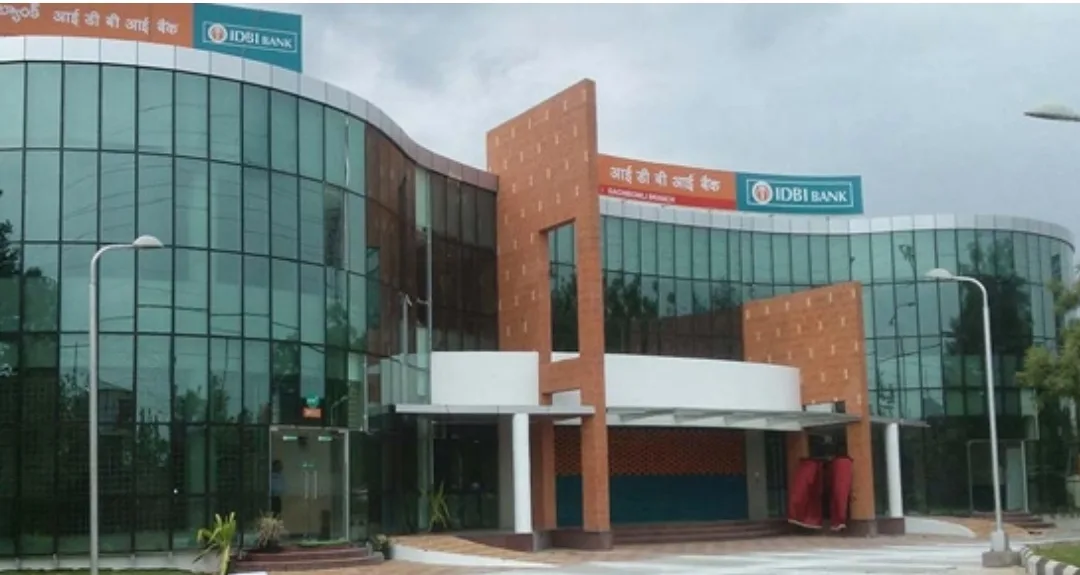
Foreign lenders operating in India spend years discovering that corporate balance sheets cannot substitute for a domestic retail deposit base. Emirates NBD maintained a representative office in Mumbai from March 2000, opened its first full commercial banking branch there in July 2017, and managed to add only two more locations over the next decade2. Rather than waiting another quarter-century to secure branch approvals city by city, the Dubai-based banking group wrote a check for approximately USD 3 billion (~₹268.5 billion) to buy control of RBL Bank5. The Reserve Bank of India cleared the final administrative step by approving the merger of Emirates NBD's Indian branches into RBL Bank from 1 December 2026, marking a clean exit from standalone foreign branch banking in favor of direct domestic control2.
Three branches cannot fund an Indian balance sheet
Building a retail banking network in India under a foreign banking license is a grueling exercise in regulatory attrition. Foreign commercial banks face tight scrutiny on branch licensing, strict priority sector lending targets that must be met without the support of deep rural networks, and steep capital allocation requirements for every physical site opened. Emirates NBD set up its representative office in India in March 2000 and waited until July 2017 to launch its initial commercial banking branch in Mumbai2. Even after following up with branch openings in Gurugram and Chennai, the lender sat with just three physical branches across the subcontinent2.
Those three branch locations served large corporate treasuries and wealthy non-resident accounts. What they could not produce was the steady flow of low-cost current and savings account deposits required to fund large-scale rupee advances. Standalone foreign branches in commercial centers depend on wholesale deposits and interbank borrowings, which reprices quickly when domestic liquidity tightens. RBL Bank offered the precise retail infrastructure Emirates NBD lacked. As of the first quarter of 2026, RBL Bank served 15 million customers through 603 branches and 1,339 business correspondent branches4.
Acquiring an existing retail distribution franchise solved the distribution problem overnight. Deploying capital to negotiate commercial leases, establish branch compliance systems, and recruit thousands of relationship officers takes decades in the Indian market. By folding its three corporate branches into a bank with 603 branches, Emirates NBD substituted an expensive outpost model for an established retail franchise3,4. The transaction bypassed the long wait for piecemeal branch permissions, replacing years of branch applications with an immediate operating presence across urban and semi-urban banking centers.
How to buy sixty percent of a bank without buying out founders
The architecture of the deal sidestepped the common friction of secondary buyouts. Rather than buying out institutional investors or private equity funds at high premia, the transaction was constructed as a direct equity injection into the bank itself. The transaction was first announced on 18 October 2025 as a preferential issue of approximately 959,045,636 fully paid equity shares at a fixed price of ₹280 per share5. Every rupee committed by the Gulf institution entered RBL Bank's capital base rather than flowing out to exiting shareholders.
The transaction value for the preferential issue equaled approximately USD 3 billion (~₹268.5 billion), calculated to grant Emirates NBD approximately 60% of RBL Bank's post-issue paid-up share capital5. Under Indian market rules, acquiring a controlling block triggers specific shareholder protection mechanisms. The transaction structure included a mandatory open offer for up to 26% of RBL Bank's expanded capital under SEBI regulations6. Regulatory filings indicated that Emirates NBD's final holding was projected to land between 51% and 74%, depending on foreign ownership ceilings and public shareholder participation in the open offer7.
On 18 June 2026, Emirates NBD and RBL Bank completed the full capital infusion transaction via a primary investment of ~USD 2.75 billion (~₹260 billion)1. The resulting 60% equity stake established operational control while fortifying RBL Bank's balance sheet with primary equity capital1. RBL Bank described the investment of approximately USD 3 billion (~₹26,850 crore) as one of the largest international investments in the Indian banking sector7. The capital infusion gave RBL Bank the balance sheet strength required to accelerate its loan book while absorbing credit provisioning without risking capital ratios.
Folding three corporate branches into a 603-branch bank trades a high-cost outpost strategy for an immediate mass-market retail engine.
Closing the loop on the Gulf remittance corridor
Emirates NBD approached this acquisition with balance sheet capabilities far exceeding those of a mid-sized domestic lender. As of 15 October 2025, the Dubai-headquartered group held total assets of approximately US $327 billion (AED 1.2 trillion), a market capitalization of around US $43 billion, and active banking operations in 13 countries8. By contrast, RBL Bank reported a balance sheet of INR 1,573.6 billion as of 31 December 2025, alongside advances of INR 1,030.8 billion and deposits of INR 1,196.8 billion4.
The Gulf institution operates across an international footprint of 826 branches and 4,555 ATMs and self-service deposit machines, serving over 9 million active customers as of 30 June 20258. The strategic logic of the transaction rests on the trade and personal remittance pipeline running between India and the Gulf Cooperation Council. Millions of non-resident Indians earn and save across the United Arab Emirates while managing property, servicing family commitments, and running commercial enterprises in India.
Prior to acquiring RBL Bank, Emirates NBD had to hand off payment flows, cross-border corporate trade finance, and personal remittances to domestic Indian correspondent banks once transactions crossed national borders. Controlling RBL Bank allows the group to capture the entire transactional chain. By maintaining accounts on both sides of the Arabian Sea, the group can clear foreign exchange, capture fee income, and retain rupee deposit floats internally. A business in Dubai executing trade contracts with an enterprise in Chennai can now process letters of credit and treasury transactions within a single banking group.
Two central banks approve a single ledger
Securing regulatory clearance for a majority foreign takeover of an Indian private bank involves coordinating separate regulatory bodies across two countries. The Competition Commission of India approved the proposed acquisition and amalgamation on 20 January 20269. Following that antitrust review, the Central Bank of the UAE issued its formal approval for Emirates NBD's proposed acquisition and amalgamation on 24 March 2026, as confirmed in RBL Bank's stock exchange disclosure on 25 March 202610.
Domestic political and financial clearances followed in rapid order. Emirates NBD received Government of India and all requisite approvals for the acquisition by 15 May 2026, clearing the path for the multi-billion-dollar capital injection to close the following month1,5. The Finance Ministry had previously approved Emirates NBD's acquisition of a significant stake in RBL Bank2. With the sovereign and ministry clearances settled, the remaining procedural milestone was the integration of the operational branch infrastructure3.
The Reserve Bank of India resolved that operational step by approving the scheme of amalgamation of Emirates NBD's Indian branches with RBL Bank2. The central bank set the effective date for the amalgamation as 1 December 20262. That order scheduled the formal retirement of Emirates NBD's standalone foreign banking presence in India, transitioning its assets, branch operations, and licenses into RBL Bank's corporate entity2.
Turning high-net-worth desks into retail deposit engines
From 1 December 2026, all Indian branches of Emirates NBD will function as branches of RBL Bank2. While converting three physical locations appears simple on the surface, merging two completely different operational styles requires deliberate balance sheet management. Emirates NBD's offices in Mumbai, Gurugram, and Chennai catered to corporate clients, cross-border trade desks, and affluent accounts2.
RBL Bank runs an entirely different commercial model. The domestic institution manages INR 1,030.8 billion in advances and INR 1,196.8 billion in deposits across a base of 15 million customers4. The incoming primary investment of ~USD 2.75 billion (~₹260 billion) completed on 18 June 2026 provides RBL Bank with a capital cushion that protects it against bad-loan cycles while underwriting new corporate and retail credit1.
The long-term test lies in organizational integration. Emirates NBD must align its governance, compliance oversight, and risk frameworks with RBL Bank's domestic retail operations without blunting local credit delivery. If the consolidated entity maintains underwriting discipline while channeling remittance flows through its expanded network, it offers a proven template for foreign banks in India: bypass the multi-decade branch application queue by injecting primary capital into an existing domestic platform.
By the numbers
- ₹2805
- Price per share for the preferential allotment of 959,045,636 equity shares
- 60%5
- Shareholding held by Emirates NBD in RBL Bank's expanded capital post-infusion
- ~₹260 billion1
- Primary equity capital infused by Emirates NBD into RBL Bank on 18 June 2026
- INR 1,573.6 billion4
- RBL Bank total balance sheet size as of 31 December 2025
- 6034
- Number of RBL Bank branches operating across India as of Q1 2026
- US $327 billion8
- Total asset base of Emirates NBD across 13 countries as of October 2025
- 1 December 20262
- Effective date for the merger of Emirates NBD branches into RBL Bank
The lens: Buy vs Build Market Entry Matrix
How to break down foreign bank expansion in India
- 1Assess distribution friction: Evaluate physical branch licensing limits, geographic reach, and the time required to establish standalone deposit gathering across Tier-1 and rural markets.
- 2Compare cost of capital against control premium: Contrast the steady cash drain of opening individual outposts with a one-time primary infusion to secure majority control of an existing franchise.
- 3Quantify bilateral corridor value: Calculate cross-border remittance, trade finance, and treasury volumes that can be internalized across home and host country licenses.
- 4Map dual-regulator approvals: Plan statutory and competition clearances across central banks and finance ministries in both jurisdictions to secure structural integration.
What to watch
- The integration of Emirates NBD's Mumbai, Gurugram, and Chennai branch systems into RBL Bank core platforms on 1 December 20262.
- RBL Bank deposit mix changes following cross-border Gulf remittance integrations and corporate trade account onboarding.
- Regulatory disclosure on final voting power and board composition adjustments as Emirates NBD exercises its 60% controlling ownership1.
For MBA aspirants
GD, PI and WAT
GD topic
Is buying control of domestic private lenders the most viable path for foreign banks in India?
For
- Acquiring an existing player provides an immediate network of hundreds of branches and millions of retail depositors that would take decades to build organically4.
- Primary capital infusions strengthen the Indian bank balance sheet directly, providing growth capital for advances1,4.
- Controlling ownership enables cross-border banking groups to capture bilateral trade and remittance flows at lower transaction costs8.
Against
- Foreign parent institutions face significant integration friction when merging wholesale systems with domestic micro-lending operations.
- Regulatory caps and mandatory open offers under Indian law create complex capital allocation requirements7,6.
- High equity valuations require large capital outlays of several billion dollars that carry exposure to emerging market currency swings5.
Questions an interviewer could ask
- 1.Why did Emirates NBD choose to acquire 60% of RBL Bank via a preferential issue instead of expanding its own branch network?
- 2.What are the balance sheet advantages for RBL Bank after absorbing a ~₹260 billion primary capital injection?
- 3.How does the Reserve Bank of India balance foreign ownership in private banks with stability and control across domestic lending?
- WAT prompt
- Examine the strategic advantages and operational pitfalls when an international banking group uses balance sheet acquisitions to replace organic branch growth in regulated emerging economies.
- As a case
- A foreign bank with three corporate branches in India wants to expand into retail lending and cross-border trade finance. Should it invest $3 billion to acquire majority control of a mid-sized domestic bank with 600 branches, or commit $500 million over five years to build a proprietary digital-first banking platform?
Read it, then practise it
Could you crack this in an interview?
Reading builds the context; a timed attempt with a live AI interviewer builds the skill. MECE scores your structure, maths and synthesis and shows exactly where you lost marks.
Questions people ask
- What did the Reserve Bank of India approve regarding Emirates NBD and RBL Bank?
- The Reserve Bank of India approved the amalgamation of Emirates NBD's Indian branches with RBL Bank, with the merger officially taking effect on 1 December 20262. From that date, Emirates NBD's branches in Mumbai, Gurugram, and Chennai will function as branches of RBL Bank2.
- How much stake does Emirates NBD own in RBL Bank?
- Emirates NBD completed a primary investment of approximately USD 2.75 billion (~₹260 billion) on 18 June 2026, which gave it a 60% controlling stake in RBL Bank's expanded share capital1.
- What assets does RBL Bank bring to Emirates NBD?
- As of the first quarter of 2026, RBL Bank served 15 million customers across 603 branches and 1,339 business correspondent outlets4. As of 31 December 2025, RBL Bank held INR 1,196.8 billion in deposits, INR 1,030.8 billion in advances, and a total balance sheet of INR 1,573.6 billion4.
Notes and sources
- 1Emirates NBD and RBL Bank announce the Successful Completion of the Landmark Strategic Investment | Emirates NBD · emiratesnbd.com
- 2The Economic Times · economictimes.indiatimes.com
- 3October 18, 2025 · bsmedia.business-standard.com
- 432 EMIRATES NBD BANK (P.J.S.C.) NOTES TO THE GR · cdn.emiratesnbd.com
- 5Emirates NBD Receives All Regulatory and Governmental Approvals, Paving the Way for Completion of the Landmark RBL Transaction | Emirates NBD · emiratesnbd.com
- 6Press Release:Press Information Bureau · pib.gov.in
- 7FOR IMMEDIATE RELEASE · webassets.rbl.bank.in
- 8Emirates NBD to acquire majority stake in RBL Bank through primary infusion of ~USD 3bn – the largest FDI and equity raise in the Indian banking sector till date | Emirates NBD · emiratesnbd.com
- 9Competition Commission of India, Government of India · cci.gov.in
- 10March 25, 2026 · webassets.rbl.bank.in
Figures are as published by these sources on or before 19 October 2026. Researched and drafted with AI, checked against the sources above and reviewed by the MECE team before publishing.
MECE Editorial
MECE Insights explains one business story a day for MBA students and aspirants: the facts with their sources, the strategy underneath, and how it can come up in a GD, a WAT or an interview.
Filed underStrategyEmirates NBD RBL Bank mergerRBI branch amalgamationforeign bank acquisition India